
It Was Never About the Math
Ash Noureldin on surviving a pandemic launch, selling peace of mind, and out-caring the competition.
Chapters
It was never about the math.
Out-care your competition.
We sell peace of mind, not math.
Ash Noureldin did everything right. He researched the franchise, lined up the financing, signed the lease, and scheduled his Mathnasium grand opening for the day before the world shut down.
What followed was two years of betting everything, losing most of it, and holding on out of pure stubbornness. Somewhere in the middle of it, he realized the business he’d bought wasn’t really about math at all. It was about anxiety, identity, and the phone call a worried parent makes at 9 p.m. It was about peace of mind.
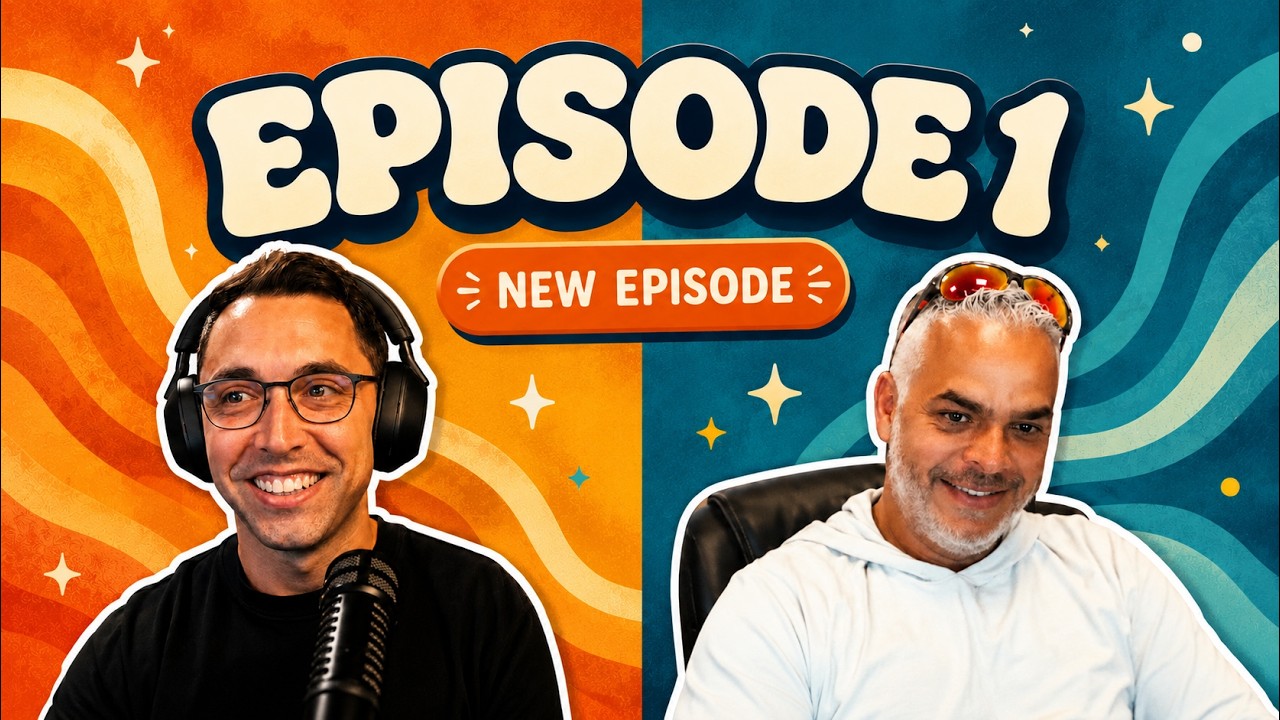
This first episode sets the tone for the whole show: the host goes first, the guest tells the truth, and the most useful stuff happens off the record.
What we get into
- Why a “cheesy” tagline — Changing Lives Through Math — turned out to be the literal business model
- The neuroscience of math anxiety, and why identity (“I’m just not a math person”) is the real thing being tutored
- Selling peace of mind instead of worksheets, and why the first phone call decides everything
- The adult welder who quietly made up four grade levels
- “Out-care your competition” as an operating philosophy you can actually run a business on
- Off the record: what launching into a pandemic — and nearly losing it all — actually felt like
Resources
Transcript
“I’m just putting her to bed in her crib in tears every night, thinking: what am I doing? I’m literally jeopardizing her future. It felt very reckless, very irresponsible.” — Ash
Dane: Welcome, everyone, to the very first episode of The Franchise Groove — with me, your host, Dane Jordan, and our very first guest, Ash, from — as I just recently learned to say it — Regina.
Ash: I did not know this was your very first episode. Cool. Congrats, man.
Dane: Thank you, thank you. So — we were just talking before we went live — the goal of this is to share some insight into what it’s like to be not only a small business owner, but a small business owner inside a franchise ecosystem. Every franchise, as we’ve learned over the years, has its own flow, and every small business operator has their own flow within that franchising flow. And perhaps there’s a piece of wisdom our listeners can take away after the episode — something in your experience that sheds light on what they could do differently, or an insight they haven’t considered before. Or perhaps someone who’s interested in jumping into a small business within a franchise ecosystem. So with that, Ash, I’d love to jump right in and ask a little more about your background. Obviously you’re up in North Regina with Mathnasium — so tell us about it.
Ash: Well, I’ve been at it for seven years now. Incorporated in 2019 — like 25 seconds before the world ended. My grand opening was supposed to take place in March of 2020, so it was a very ominous start. But we soldiered through, had to reinvent some wheels and manuals and just survive. The value proposition for Mathnasium is solid, so I knew that if we could just survive the chaos and then resume normally once the physical doors could open, we’d be fine.
From financial planner, to Big Brothers Big Sisters, to Mathnasium
Dane: So take me back to that time in 2019. What was going on in your mind, and where did Mathnasium come up as an avenue that felt enticing and worthwhile to jump into?
Ash: For me personally, my background is business. I used to be a financial planner and made rich people richer, basically — which was fun, but wasn’t exactly as rewarding, not exactly high-impact on the emotional front. And prior to Mathnasium, I was the CEO of Big Brothers Big Sisters here. I’ve always been passionate about kids and moving the needle forward on issues. Growing up is tough, and if there are tools we can bring about to make that journey easier, then I’m all over it. After I resigned from Big Brothers Big Sisters, I was in a cool spot where I had the option to go back to the private sector and make a lot of money, or keep going with the mandate of trying to make things easier for kids.
Dane: Pretty quick, before we jump into that — Big Brothers Big Sisters, a little refresher, high level, on what that initiative was?
Ash: In short, it’s a volunteer-based mentoring program where we align kids, usually from single-parent homes, with a mentor — a big brother or a big sister. And it creates measurable, high-impact outcomes. Seeing those outcomes firsthand was just something that made me go, “Yeah, there’s a lot more space in the child-serving arena where we could definitely have an impact.” So when I resigned, I had this weird choice: do I want to go back to the private sector and make a ton of money, or what do I want to do? I’d been looking for business opportunities, and of course, when you’re googling things, the Google gods send you everything. So Mathnasium just appeared out of nowhere. I’d never heard of it in Canada — it’s a franchise out of LA. I put in an expression-of-interest form, and within two days I was on a plane to Toronto getting vetted by the franchisor. I saw the value proposition for it and I was just like, “Yeah, this is crazy cool.” And then within months I incorporated, and the rest is history.
Dane: Wow, that’s awesome. So it sounds like your experience at Big Brothers Big Sisters really had a formative impact on your trajectory into Mathnasium specifically. I’d love to learn more about what you learned — you talked about some very noticeable impact there. How was it going from something where you’re seeing this impact into a new domain like Mathnasium? I imagine you had certain standards or expectations coming in — like, if we can’t really measure this impact, this isn’t worthwhile for me. I don’t want nebulous.
Ash: It’s a really good point. And what I really did like about Mathnasium is that it’s all data-driven. In order to make any kind of sound decision, you need access to information — good information. And this wasn’t just sunshine and unicorns, you know what I mean? This was a brand and a process that was tried and tested. It had a good track record, albeit a little young — it had only been around a couple of decades at that point. But it definitely spoke to the passion, the sunshine and unicorns, while also backing it up with data. And my background isn’t education; like I said, it’s business. So I didn’t truly understand what I was bringing to this market until we actually opened. I always knew the school system had its challenges, but when I bought Mathnasium, I thought we were going to be the icing on the cake — that the school system is still the cake, and we’re just here to ice it for 10 to 15% of the marketplace. And with the benefit of hindsight, I look back, Dane, and I just say, “Yeah, that was completely wrong. We are the cake. We are the icing.” Given the status quo of what’s going on in education on this continent — it’s unfortunate, but at the end of the day, we can either try to fight it or just go around it and do our best to change outcomes.
”Changing Lives Through Math” — the tagline he thought was too cheesy
Dane: How soon was that apparent after buying Mathnasium?
Ash: I’d say after a couple of months. It’s funny — when I was in Los Angeles… I’m a huge fan of marketing. When you buy a franchise, you don’t mess with the marketing, the brand, the logo — all that stuff’s already pre-planned. And when I was opening up the marketing package, so to speak, I saw our tagline: Changing Lives Through Math. I’m a huge fan of marketing, but when I read that tagline, I thought it was a bit much. Borderline cheesy. I kind of wanted to call up Jim from marketing, or whatever his name was, and say, “Bro, what were you thinking?” And then after we opened and started to impact kid after kid after kid, all of a sudden all these Karens were calling me up asking, “Ash, what the hell did you do to my kid?” And I’m like, “Uh-oh, what do you mean, Karen?” These were kids who spit on math, hate math — “it grosses me out,” right? And all these kids, all of a sudden, within a month, Dane — two months — would go from “I can’t stand this thing” to literally getting me yelled at if they see me in a mall somewhere. I’m getting chirped by a grade-three kid who’s yelling at me because we’re closed on Fridays and they want to come in and do their math. That’s the kind of turnaround. And I just found that, the first time, the second time, the fifth time, I’m like, wait a minute. And then when one mom told me, literally, that we’d changed her son’s life, I remember thinking, “Ah, Jim from marketing — maybe you had it right. You had it right the whole time.” And ever since then, it’s been nothing but more of the same.
Dane: That’s really fascinating. That’s certainly eye-opening to me. I’ve heard of the space, and I think I would have had the same response you had with “Changing Lives Through Math,” because you hear about math and it’s one of those things that so many people — kids and adults alike. I was just having a conversation with a friend of mine, a 19-year-old, asking about his plans for the future, and he’s like, “Oh, I wouldn’t want to do engineering because I suck at math.” My knee-jerk reaction was, I wouldn’t want that to be a limiting mindset — but I don’t really know: is math something you’re more born with, more privy to? I found math was one of my easier subjects. I felt lucky in that regard; it helped me get through engineering. By no means was it a silver bullet — I had to work my butt off in college, for sure. And if anything, the people who learn math easier get lazy, because they don’t need to work as hard, and then when the hard math comes, they’re a little less equipped.
Ash: Yeah. Yeah.
The psychology of math anxiety: cortisol, dopamine, and identity
Dane: But yeah, that’s fascinating. So I’d love to learn a little more about where this transformation is coming in. How is this about-face happening in two months? That sounds fake — you’d think it’s a six-month process, that you really have to warm up to it. These kids almost have trauma attached to this. They have identity issues, where they feel like, “I’m dumb. I’m a dumb person.” At a level like this, it’s almost like a therapeutic approach you have to start with first, where you’re like, “Hey, let’s first walk back this whole identity issue you have around math, and just talk about it as a skills issue.”
Ash: You nailed it. You absolutely nailed it. It is — I want to say 100%, but I’d say it’s at least 80% — psychological warfare. I can see it the second they arrive here, and I love it, because it’s the same outcome every time. Step one is I have to assess every kid — to make sure they’re a good fit for us, and that I understand them, because we’re about to serve them. We’re about to change their lives; I’d better know who I’m dealing with. And they always arrive here, Dane, the same way: shoulders up, passive-aggressive, ready to punch a baby. They hate it. I’m just smiling. And the first ten minutes of the assessment is just shooting the breeze. I get to know them, and they’re going to tell me everything I already know, but I let them talk, let them tell me they hate math, they think it’s stupid, they think they’re stupid. And if you look at the common thread in every initial assessment, it’s just a toxic relationship. It’s like being in an abusive relationship where someone’s telling you, “Go back, go back, go back.” And it sucks, because they’re not really given anything other than “go back, work harder, focus” — all these things that aren’t actually the answer.
Dane: Exactly.
Ash: And so what’s different here is we’re not going to meet them where they’re supposed to be at based on their age or grade. That’s the school system in a nutshell: “You’re here, we’re going to meet you here.” But the reality is, they’re actually here, and here. So is that a fair fight? If you put me in the ring with Mike Tyson today, I’m down here and he’s up there — probably higher. What’s going to happen? I’m probably going to get my ass handed to me. And so that’s basically, unfortunately, the secret sauce. But when you really unpack it layer by layer, it comes down to the kid saying, and believing, that they hate math. Whereas when they’re leaving, they’re skipping down the sidewalk saying, “I don’t hate math. I just hate not understanding it. And if I’m taught in a way that actually makes sense to me — guess what? — I actually enjoy it.” So that’s all the psychology of it. It’s literally cortisol versus dopamine. What’s the experience? If they’re going to see check marks every once in a while instead of X’s, that’s going to release dopamine, make them feel good, and they’re going to want more of that.
Dane: That’s super fascinating. That feels almost like a self-reidentifying franchise that happens to teach math.
Ash: Correct.
Dane: Because I see the foundational work as being so much more than just math. That’s redefining your relationship with yourself — and then we teach you math.
Ash: 100%. And what’s — again, I didn’t learn what you just concluded there until probably two or three months in. And it wasn’t me putting it together; it was me literally needing to be told by parents, “Bro, this has changed their lives.” And when you ask them to unpack that, all of a sudden the kids are leaders at home. They’re helping their little brothers. They’re leaders in the classroom. They want to engage, they want to do chores, they want to win. It’s just infectious. And it all started, like you said, just by accomplishing something they genuinely thought they sucked at.
Dane: Wow. That’s super cool. That’s almost like missionary work. I see a very deep element of this, and that’s what intrigues me so much about going on this podcasting journey — really digging past the corporate slogans, past the marketing you just talked about. Like, “Oh, Jim from marketing, we’re changing lives.” Sure, you hear this at a surface level and you go, “Okay, sure, changing lives, all right.” Maybe you start coming up with conclusions like, “Oh, it’s an underserved market, there’s a bleeding-neck issue because it’s an impoverished community, and it’s a really tough issue and they can’t get through. Okay, fine, then we’ll get a band-aid.” But Mathnasium is much, much more radical a change than that. And you would never know until you start looking into it. So it’s like, do you ever get that far? Probably not.
Ash: Unless — and if you do, you’re probably a franchisee.
Dane: Yeah, for sure.
Ash: And you could put together the best, most attractive franchisee sales and business-development package, and it still doesn’t capture it until you’re actually in the trenches, seeing the shoulders go down, and the relief, and the check marks, and the winning, and everything that ensues from that. You just can’t put that in a manual, or market it, other than on a case-by-case basis.
Dane: So with your track record of success so far, what do you see as the moment — the aha moment? Because it makes a lot of sense to me, understanding Carol Dweck’s pivotal research and the growth mindset, right? Where the whole idea behind creating change is to release your attachment to an identity. This is a new wave of parenting and teaching and coaching: just focus on the skills and the effort, not the identity — because if you get wrapped up in an identity, your identity gets attacked the moment you can’t answer a question.
Selling peace of mind, not math
Dane: It makes sense to me, but how — where do you see the aha moment with the parents, when they’re on a phone call or doing a tour? What’s the high-level onboarding approach you have with parents? Even parents are the ultimate customer.
Ash: Yeah, I know what you’re saying. It’s usually on the phone. And I’m a huge proponent in business that you need to provide value at every junction. The initial phone call is the biggest opportunity — it usually ends up being a make-or-break kind of thing, from a lead to a conversion. So I’ve been very mindful of ensuring that before they hang up, they hang up literally going, “What the hell was that? That was awesome.” A lot of the phone call, initially, starts with listening — listening to them dump, basically. And I’ll tell you, it is active listening, but I already know what they’re saying, because they’re calling me. Some parents are calling because their kid’s a nerd and absolutely loves math and wants more of it, and I’m like, “Yeah, okay, that’s easy.” But that’s literally maybe 5% of the time. The other 95%, I already know why they’re calling. And so when you listen over and over and over, the value for parents is to explain why they’re requiring the solution — why it happened, how it happened, when it happened — and then dangle the carrot of what we can do about it. And that’s where the deficit within the school system really becomes exposed. For example, math is a very sequential subject. Everything Timmy is taking today in the classroom is based on something Timmy took yesterday, or last week, or last month, or five years ago. And if you don’t have all that locked down, it’s going to be hell on earth — which is why they’re calling. The other thing is, I don’t know what market you’re in right now, but the way we talked a little earlier about data — parents ultimately want data from the system, so they can make decisions. Well, in Canada at least, we’re not giving parents data anymore. We’re giving them ambiguous feelings. Report cards that basically say, “Yeah, your child meets expectations.” What the hell does that mean? Nobody knows whose expectations we’re talking about. What if she had a bad day? “Hey, everyone gets a participation medal.” And in math, it’s almost black and white. I’m not a black-and-white guy, but when it comes to measuring math, actually, yeah, it is. I want to know: can my daughter add single digits or not? Not kind of, not sort of, not some digits. It’s a yes-or-no question — either she can or she can’t. But what ends up happening is, this culture has gone pretty far in one direction, where if you don’t finish the race you still get a gold medal, where good enough is good enough. See you next year. And parents don’t know what to do with that information anymore. So when you explain to them the why behind where their kid is at — and that it might be as simple as, you’re just not being provided with information, or the information you’re being provided isn’t accurate, so you’re making decisions based on faulty information — that piques their interest and provides relief. And then once we get them in here and give them an assessment and actual data, it’s just this massive relief. Because ultimately, I don’t look at myself as selling math help, even though that’s what the sign on the door says. I look at myself as selling peace of mind. They have a billion other freaking moving parts in their lives — parenting and this and that, coming and going. And this is just one avenue where we’re saying, “Give me all your money, bro, put your feet up, and we’ll do the rest.” You just purchased peace of mind, and I can all but guarantee the results.
Dane: Wow. So selling the peace of mind, to your point, is the biggest selling point.
Ash: Correct. You mentioned there’s so much going on — so this is just one less thing. And then here’s the data to prove this isn’t just me blowing smoke up your ass. This is data-proven. We’ve been in the industry for decades. This is a tried-and-true solution.
Dane: I’d be curious — what are the most common objections? If they don’t believe you, what would you say is the most common pushback or objection?
Ash: I rarely get them, honestly. It’s usually just cost. And that’s an unfortunate thing, but we’re doing other things to get third-party funding for the parents who can’t afford it. It’s not easy in such a saturated market, but it’s usually just cost. Some parents — I already know the family won’t be a good fit. Every kid will be a good fit, provided they want help, but sometimes it’s the parent that’s the barrier. When I say that, I can’t really talk about a ton of examples, other than the parent knows the kid has been struggling with math for seven years, they’re in grade 12, about to go to college or university, and they just want it fixed in five weeks. And I’m just like, that’s not how math works. You just finished telling me this has been a pain point for seven years, and you expect Timmy to just own this in five weeks? That’s not fair to Timmy. Most parents can understand that, but there are some parents that are just pretty stubborn — head down, “No, I want it fixed now.” And it’s like, well, that’s not how anything works, and it’s really unfair to Timmy.
Dane: Would you say, a rough percentage of those parents who end up declining — being interested but financially not able to invest?
Ash: Financially? I’d say about a third. Because they have their football, and they have their hockey, and they have their this and their that, and it’s just like, I get it. I’m a parent too, and my kid has four activities on the go and all that stuff. But it’s also priorities, right? Is my kid going to be a soccer all-star or an Olympic swimmer? Maybe. But I also know math is everywhere, like you said earlier, when it came to the doors — later into high school, kids start choosing the channel they’re going down, into the grade 10, grade 11 space. And those kids that think they hate math — well, there are a lot of doors being closed there.
The welder who made up four grade levels
Dane: Now that you mentioned that — because I had spoken to a friend, he graduated high school a year ago — do you service adults too? Because I think this is an issue rampant in humanity as a whole, not just kids. Obviously when you’re a kid is when it’s given to you, but depending on how far you go — if you just end at, say, Algebra 2, or pre-calc, and you never go into calc. But I see this as an identity-reassignment formula through math. Math is just a medium to show you: hey, you could do this, and here’s the data to prove it.
Ash: 100%. So the sign on the door says grades 2 to 12. But I remember, in my first year, I’d get some calls from guys in their 30s and their late 20s asking for help, because they’re trying to go back to trade school, get a ticket for their dream. And initially I’d be like, “No.” And then one day, I don’t know why, I just said, “Why not? But I’d have to meet you first, and assess you, and make sure you’re a good fit.” And I met the first guy — I think he wanted to get his welding ticket or something like that. Couldn’t do fractions. Well, that’s grade-six stuff, right? And he needed to be at a grade-10 level just to get into what he was trying to pursue. In one year — a year and a quarter — he made up four and a half grade levels. And I’ll never forget the Google review he left for us. It was awesome. But I was just so taken aback by what you just said, how it literally does apply across the board. And I was actually incredibly proud of him, because as a young adult, that’s hard, right? This notion that you want to keep going forward — sometimes you’ve got to take some steps back, and then be persistent and consistent, and don’t get distracted, and don’t give up. I was pretty proud of him. And so from that point on, yeah, we’ll take on anyone who needs help with math.
Dane: That’s beautiful. Huge kudos to that gentleman, who really said, “You know what, I may be surrounded by kids.” I play chess a bit, and I see in my feed every now and then these chess grandmasters, or rising chess players, and they’re playing a six-year-old, and your ego just goes, “What the heck? I’m playing like this, and a six-year-old just kicked my butt in chess.” And so, to commend that gentleman — he dropped the ego. He said, “Hey, this is what I need to do, and this is what I’m going to do.” I think there’s some powerful stuff that could be learned through that.
Ash: Oh, yeah. He unlocked four years of progress. And I can’t even imagine the impact that has outside of math, too, right?
Dane: Right. We’ve kept revisiting this — it’s more than math. It’s the self-identity that gets bolstered, and your ability to reinvent yourself at any stage in any life, should you be willing to strip the facade of, “Oh, I’m 25 years old, I’m too good for math, this is below me” — which is almost a natural thing. Who in their right mind would want to go back into a classroom and have little Timmy come over and say, “No, that’s not how you do it, you did it wrong”? That takes an immense amount of humility, which I think is very challenging to summon these days.
Ash: Yeah, you’ve got to really undo that wiring, because most of it is just storytelling. The mind is a very powerful thing, and we, as human beings, are very vulnerable to telling ourselves these stories that, the majority of the time, aren’t even true. And it takes a lot, like you said, to come out of that and just try something different.
Dane: Love that. You’d mentioned earlier that your work as CEO of Big Brothers Big Sisters created a very natural segue into Mathnasium. How has that flow been for you — being a CEO owner of essentially the entire flow of all operations, to now, you’re still a CEO of course, but within a larger ecosystem? How have you found that transition to be — having more things done for you versus needing to be done yourself?
”Out-care your competition”
Ash: For one, it has its perks, for sure. A lot of the fundamentals are actually the same — it’s just that a lot of it is outsourced. I mean, we pay a royalty, so it’s kind of like saying I’m paying an employee, except this royalty is going toward a facility or a function, and that function has to produce and do what its description says. So for Mathnasium, a lot of it is the technology platform, and obviously the service delivery, the education component. So it’s almost like having a perfect employee, where you don’t have to do performance reviews very often, or take them to HR because they did that thing. But the fundamentals are all the same as a CEO. You still have a myriad of facilities that need to work together for one mission, one outcome. Operationally, it’s kind of the same philosophy as when I was at Big Brothers Big Sisters, which is, you’re only as strong as your weakest link. And from a business lens, the competitiveness — what sets us apart — would be the same here as it would be there. My number one philosophy in business is that we just have to out-care our competition. If the competition cares this much, we’ve got to give a [expletive] just a little bit more. And that’s it — you can’t lose with that value proposition. You just can’t lose.
Dane: I love that. As we move forward in our entrepreneurial journey, that tends to resonate. You always look for two strains of thought there. The sort of advice of “do it this way, this is the best way to operate” always feels like it’s going to be hit or miss — so contextual to your circumstances that it can be even more misleading to follow someone who’s doing the same business, or a very similar business, similar place in their development, similar demographic, but a different place in their life. And you listen to this and you say, “Okay, follow it,” and it does more harm than good. What I always love is finding the emotional drivers of business. Let’s get past this operational layer. Operational seems like a layer on top of the more foundational core values. What are the core values of the business? And if the core value is aggressive and extensive care, then that’s going to seep into the operations, where we say, “Hey, we’re going to be servicing these leads within a couple of minutes of them coming into our inbox. Hey, we’re going to provide a very gracious two-month refund policy,” whatever it is — because the care is there. You focus on the foundational element, and the operational layer on top of that becomes a bit easier to facilitate, because we’re not just following a playbook that’s been given to us by the people who have been exceeding in the space. We’re operating on a much more core, foundational level, which allows us to then create these processes that may inevitably look very similar to the ones we hear all about everywhere, but ultimately they were grown from our own experience and path throughout this business building.
Ash: Yeah, 100%. When you look at the value proposition — again, back to the whole tagline, “changing lives” — how intimate is that? That’s incredibly intimate. And is every life we’re changing the same? Of course not. Every life is unique, and every kid is unique, and that’s literally the whole point. So if you’re taking a one-size approach, it’s not going to fit all. And that just forces you to really engage and understand, individually, who you’re dealing with — not just from a kid’s vantage point, but from a family’s vantage point. It forces you — I don’t know if “force” is the right word, but I’ll keep it with “force” — it forces you to be authentic. Because you can’t [expletive] your way; you can’t cookie-cutter this stuff and just call yourself impactful across 200 unique families. They’re unique for a reason. So you’re right, it’s very subjective.
Dane: How would you say that you, Ash — your personal idiosyncrasies and philosophies, and what drives you and motivates you, and what you feel you’re good at — meshes or doesn’t mesh with business operations?
Ash: I’m a problem solver. That’s kind of been my M.O. for my entire adult life. What I find works for me is that I tend to look at business as a whole, and I like to look and see what everyone is doing, and if that’s what everyone’s doing, I need to go over here and figure out a different way, or a better way. Like, the world zigs, I tend to zag. And I think that’s driven me — I know it’s driven me in past ventures, and in this. The big one for me would be marketing. Because again, it’s just the nature of the day and times we live in right now, Dane, but everyone’s very scared to be real, and just to say it the way maybe it needs to be said. It’s all about being PC. Although I think the pendulum is kind of swinging — I don’t know what’s going on anymore. But what I’m finding is that people are scared, at least within this ecosystem — or apprehensive, maybe “scared” is a bit harsh, but apprehensive to call a spade a spade, especially when it comes to education. Because teachers are warriors. Everyone’s working, doing their best. But kids are struggling, so no one wants to just have a real conversation about why that is. Two things can be true: teachers can be warriors, and we could be producing shitty outcomes, in the same vein. That’s actually what’s happening. And in order to really understand what to do about that, we have to be comfortable in the mirror. We have to be honest about whatever it is we see, and we need to be able to call a spade a spade if we’re going to make progress. And that’s what I find, to your question of where the similarities or the differences are — I’d say that’s kind of been the big difference for me. I know I can make people nervous, because they’re thinking, “Oh, what’s he really going to say? Is he going to say how he thinks, or what he feels?” But it’s not just coming from a feelings base or an emotional base. It’s coming, again, from a data-driven platform. And I really don’t care how it feels, because at the end of the day, it’s about the kid. Because that kid doesn’t get the time back. This is the child’s future. And if it means having a hard conversation and calling something out for what it is, then I will absolutely go there.
Dane: Love that. Love that.
Off the Record: launching into a pandemic
Dane: Cool. I’d love to transition to a new recurring segment of the podcast we call Off the Record, where — you’ve shined a very rainbows-and-unicorns story on your entire past and everything you’ve been through, but I want to switch it up a little and go on the other side, and talk about something that perhaps didn’t go according to plan, or wasn’t what was originally expected, and how you benefited from that. And I’m happy to lead by example here. So, a little background on our company. We started a couple of years ago, in the very early days of when AI could solve the tasks we were trying to solve, and there wasn’t a lot of instruction online as to what to do. A lot of the documentation was very sparse. We’d follow the documentation and it just wouldn’t work. So even some of these AI providers didn’t really know exactly how it worked. And that’s a fundamental issue with AI: you can’t really trace back why a specific outcome was created. You know the mechanism of how, but not why any specific outcome was generated. And so at one point we had this incredibly brittle architecture that spanned something like 50,000, 60,000 lines of code. And then we decided, hey, this is working, but barely. Let’s scrap it and start fresh. And we did — our architecture is much more robust now. So that was tough, and it makes me think, I’m fortunate to be in a space where I have the leverage to say, “Yes, we can just delete — press backspace on five months of work.” The team is small enough that we have that leverage. There’s no internal politics where we have to justify why. We don’t have to convince anyone. We don’t have documentation. We can just move. And that’s one of the merits of a startup. But it certainly redefined how we approach problems now, trying to keep it as simple as possible, reduce as much coding impact as possible, and really pressure-test — because if it’s not tested, it’s just one more failure point, and that failure point could affect all the people who are relying on us. So I put a lot of pressure on making sure everything is rock-solid.
Ash: That’s awesome. Good for you. That’s cool.
Dane: But yeah, to your point — I’d be curious about yours.
Ash: For me, I don’t think — I know — it was the pandemic. Like I said earlier, I scheduled the grand opening for this place — an in-person thing, literally the value proposition is in-person service — the day before the pandemic.
Dane: Wow.
Ash: And that was probably the test of my life. I’ve had a pretty interesting life, with a lot of tests, but this was definitely the mothership. You sink hundreds of thousands of dollars into startup costs. You have no revenue engine turned on. You have no market presence. You have no brand equity. You have nothing but hundreds of thousands of dollars of debt. And when do businesses fail, Dane? In that first year. The majority of businesses are going to fail in that first year. And I remember that moment where it was kind of a crossroads. Even the franchisor in Los Angeles called me and they’re just like, “Bro, turn around. What you’re about to do has never been attempted in the history of the brand.” I didn’t even have staff yet. I hadn’t met my staff. We didn’t have any online platform, we didn’t have anything. And so I just felt, at that point, you know what? If I’m going to go down, I’m going to go down swinging. And away we went. I had a really awesome partner in crime at the time, and he was good at the tech stuff and the details, all the stuff that I absolutely suck at, and I was really good at the communication and the business, the macro. And it worked really well. Together, it was tireless. It was 24-hour days. I had a wife on mat leave with a newborn, and I’m betting the farm, literally. And once we got going, we were growing exponentially, but the problem was, economically, if I was putting a dollar of revenue on the books, it was costing me a buck eighty. So it was also a financial bloodbath. But as we started to impact kids, and I started to see what was happening, I was like, “Okay, you just need to survive, dude. You just need to survive to the end of this” — whenever this is. In hindsight, I thought it was going to be, like we were told, two months, then six months, and all of a sudden it turned into a year, and then two years. So I doubled down a few times. But by the time the pandemic ended, I had lost everything. But we were open. We had the Google reviews. We had the impact. People were talking about us. And I always knew the math, ironically, would work if I could just survive, with enough blood in the system to keep the heart pumping, so to speak. So yeah, I did survive. Barely. I lost everything. I didn’t even qualify — there were government subsidy programs where business owners would get rent taken care of, and I’m literally paying $5,000 a month in rent on a construction finance. I’m losing $10,000 a month on something I can’t even use for two years, plus payroll, plus all that stuff. Nope. I had to subsidize it all out of my own pocket. And at the time, I had a daughter who was one, and I’m just putting her to bed in her crib in tears every night, thinking, what am I doing? I’m literally jeopardizing her future. It felt very reckless, very irresponsible. But I’m the type of person that if my back is up against the wall, I just break the wall down. And that was the two years. Just hoping one day I could live to talk about it. And here we are, five years later, talking about it.
Dane: Wow. What a story. That’s fascinating.
Ash: Yeah. What doesn’t kill you makes you stronger, Dane.
Dane: How soon in did you see the light at the end of the tunnel? Because I’m sure it was pretty dark for quite a while there.
Ash: It was so up in the air. There were days where I could see the light very clearly, and it’s like, tomorrow. But we were being told so many different things, and it was all based on timelines, right? Like, I remember early on, “Help is on the way.” Well, help never came. “This thing will end in six months.” It didn’t. “We got a cure.” Well, there is no cure. “It’s going to fix everything.” It didn’t fix anything. And so it was just a roller coaster of emotion, but I knew, at the end of the day, I had only one choice, and that was to keep going until — that’s it. And it was just a matter of who’s going to win the race. And thankfully, I did win the race. So no, it was nothing but pure uncertainty. I knew the math would work if I could get to the finish line. I just didn’t know where the finish line was, because nobody knew what was going on.
Dane: What was going on in your head every day? That feels to me like a real weapon of persistence — you need to find some source of motivation, of willpower, when there’s literally nothing outside. The world is telling you to stop. The world is telling you that this is the wrong direction. You’re right — you’re flying an airplane, and the hand of God just pushes the airplane down.
Ash: Yeah, you’re right. I don’t know what kept me going. Actually, I think I do know, and I think it was my daughter. There were times where I’d be walking, just in a center that I can’t even use, and I’d feel my knees weaken, and I’m like, “All right, I’m about to hit the ground.” And then I would close my eyes, getting ready to brace for the ground, Dane — and I would just see her face, and I would open my eyes and just keep going. A very fascinating source of fuel, that kid.
Ash: Are you a father?
Dane: No, not a father. Not yet.
Ash: They’re a force, man. They’re just a force. Nothing like — I’m a very driven individual, but when my daughter was born, it was just next-level, exponential force. It’s almost like I don’t have a choice.
Dane: Wow. Fascinating. So fascinating. I always think about that. I hear all these business magnates who end up having kids, and just what life is like as a result — because at a surface level, obviously, from someone who doesn’t have kids, it feels like such a time investment that you don’t see returns on for quite a while. Maybe even not till the teenage years. You’ll get glimpses here and there. Obviously, once they’re an adult and they’re self-sufficient, you kind of see, “Hey, I did it, I made this happen.” Especially in the early stages, it sounds almost like this is the wrong time to start a business, when you have a newborn. I think that’s a perfectly rational conclusion to have: “Let me wait till my kid is out of diapers and a little more self-aware.” But it sounds like it was a source of fuel for you through these times.
Ash: 100%. And it remains — it still is — like everything. I’ve always had purpose in life, but once you have your own child, it’s just like, okay, this isn’t even about me anymore. And they’re just great teachers. They’ll teach you about themselves, for sure, but they’ll teach you more about yourself — if you know where to look, and if you’re truly present with them, and able to understand what they’re saying and how they’re saying it. It’s very fascinating. I’ll always be a student of parenting, and of kids, to be honest.
Dane: Love that. Love that.
The one thing he’d tell his younger self
Dane: So we’ve been a solid 45 minutes into the episode here, and I think it’s the proper time to cap things off. I’d like to leave us on a note — something, Ash, that you’ve told or learned over the years, perhaps in your years of financial planning, maybe even before becoming a business owner, that if you could whisper this idea or mindset into 10-years-ago or 15-years-ago Ash, in order to best prepare them, best push them, encourage them, nurture them in the right direction — especially something older Ash was not privy to or aware of. What would that be?
Ash: I think it would be something I referenced earlier, and that was to out-care your competition. The market is starving for just genuine, authentic give-a-[expletive]. And it really is the advantage. What I really appreciate about Mathnasium is that yes, it’s a franchise, but it’s not your typical franchise with the golden arches, where you’re just buying a product, and you open your shop and put up your golden arches and crank out a Big Mac. I’m going to get sued now, but anyway — we’ll bleep it out.
Dane: Yeah, we’ll just bleep that out.
Ash: When you’re dealing with service, when you’re dealing with the general public in any capacity, and you just genuinely care, you’re going to win. It’s so frustrating now, going through a drive-thru even, and grabbing something, and half the time I can’t even understand what I’m being told or what I’m being served. It’s all about the experience, the customer experience, and we have full control over a customer’s experience. And even mistakes — I tell this to my staff all the time, who are no longer terrified of making mistakes. It’s like, no, get out there, [expletive] it up, make a mistake, right? Because that’s an opportunity for you to learn, and for us to show up, to show off what we’re made of. Because I want you to come in here and tell me every week that you made a mistake. Just don’t come in here and tell me you made the same mistake, or I’ll throw you through a window. No, I won’t do that. But because I know you’re going to make mistakes, it’ll make you better, and it’ll make us better. And what better advertising is there? “Hey, they dropped the ball, and this is what they did.” That’s ultimately what everyone wants: they want to know that they matter. And that’s just something that’s proven itself to me over and over and over and over. You said ten years — for me, it’s at least a quarter of a century. Yes, I’m that old.
Dane: Awesome. Well, I want to thank you very much, Ash, for all of your incredibly insightful, incredibly enrapturing stories, your spirit of motivation, pushing through tough times, and finally being the first-ever guest on The Franchise Groove. Ash, thank you so much.
Ash: Thanks for having me. Thanks, man — appreciate it.
Dane: Bye, guys. We’ll see you in the next one.